Practical Sovereignty Through Need Driven Research
(From Prestige to
Purpose in Indian Technical Education)
Introduction Technical universities should give a
nation the knowledge, skills, and tools to stand on its own feet. Education
and research must be instruments of national strength, not symbols of status.
When institutions chase approval from outside, they risk turning research into
a drain on the country instead of a source of power.
The problem
Many developing institutions follow research agendas set by
global prestige and Western literature. This trains researchers to ask the
questions the literature asks, use the methods the literature favours, and
value the outputs the literature cites. Over time, this produces solutions
that look good on paper but fail in local conditions.
A practical alternative
Need driven research puts community problems, local
industry, and ease of maintenance at the center. Fund projects that improve
livelihoods, health, infrastructure, and local industry. Insist on designs that
are easy to repair, can be made locally, and pass skills to local people.
Existing policy tools such as national research funds and state R & D
programs already support applied work and can be used to change incentives.
Changing research culture
Supervisors and teachers must train students to read
critically and to ask whether a method or idea will work here. Research should
be driven first by clearly defined problems that reflect societal, industrial,
and national priorities; literature reviews should be consulted subsequently to
refine approach and methodology. Successful original research of this kind will
enhance the nation’s reputation, reduce the outflow of foreign exchange, and
contribute to improve per capita income. Include government reports, NGO
studies, local journals, and the knowledge of practitioners along with
international scholarship to widen the sources of knowledge.
Supervision and Accountability
Research supervisors should be asked to justify the topics
they approve within a clear framework of local, industrial, and national needs.
This requirement is not meant to punish independent thinking but to ensure that
limited resources and student effort serve a meaningful public purpose. A
simple, transparent review process can ask supervisors to explain how a
proposed thesis addresses social or industrial priorities, builds transferable
skills, or strengthens local capacity. If a supervisor cannot show such
relevance, an institution may reasonably limit their role in guiding projects
that lack clear connection to these priorities while offering mentoring and
support to help them realign future proposals. Safeguards must protect academic
freedom: criteria should be fair, applied consistently, and include an appeal
process. Framed this way, the requirement becomes constructive: it raises the
quality and impact of research, strengthens accountability, and affirms that
universities exist first to serve the nation and its people.
Partnerships and procurement
Make sure foreign collaborations include clear commitments
to transfer technology, provide training, and develop local intellectual
property. When buying equipment or software, judge choices by their effect on
jobs, the country’s foreign exchange, and technological independence, not by
brand names.
Refined
risks, trade‑offs, and mitigation
Risk: Short
term dip in productivity while local capacity is built
How to
reduce it: run phased procurement alongside training and pilots; keep some proven
imported systems in operation during transition; pair local teams with
experienced mentors; set clear short‑term targets so progress is visible.
Risk:
Perceived loss of prestige
How to
reduce it: adopt new measures of success such as resilience, repairability, and
lives improved; celebrate local successes through awards and case studies; link
promotions and funding to impact rather than brand names.
Policy fit
and practical steps
Use national
programs that support applied research and industry links. Offer seed grants
for need‑driven projects, create industry fellowships for faculty and students,
support incubators that turn prototypes into local products, and include local
content and training requirements in public procurement.
Short
summary of productivity gains
- Lower downtime
because equipment is easier to repair locally.
- Lower lifetime cost as
maintenance and spare parts are cheaper and available.
- Faster adaptation of
technology to local needs, improving effectiveness.
- Skill growth that
raises labour productivity and spurs local innovation.
- Employment multiplier as
local manufacturing and services expand.
These
benefits outweigh the short transition costs and lead to sustained productivity
growth for institutions, industry, and the nation.
Practical steps for universities
- Align
research with social needs: Fund work that helps livelihoods, health,
roads, water, and local factories.
- Build
local manufacturing and repair skills: Design for repair, make parts
locally, and teach maintenance.
- Resist
buying prestige: Evaluate purchases for job creation, cost over time,
and how they help local technology.
- Use
many knowledge sources: Add government reports, NGO studies, local
journals, and practitioner experience to the reading list.
- Teach
critical reading: Train students to test assumptions, check if methods
transfer and adapt ideas to local conditions.
- Make
partnerships accountable: Require training, technology transfer, and
local ownership of ideas.
A closing challenge
If institutions keep chasing outside approval at the cost of
national strength, they will stay trapped in dependency. True academic rigor is
more than clever arguments and famous names. It asks whether our choices
actually help the people we say we serve.
Measure success by resilience, repairability, and the lives
improved, not by logos, citation counts, or borrowed prestige. Reorienting
research toward practical sovereignty is not against global engagement. It is a
mature way to work with the world while protecting dignity, building skills,
and securing the nation’s future.
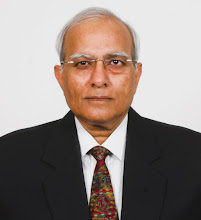
Sunil Pandey
Distinguished Professor of Mechanical Engineering,
Department of Mechanical and Mechatronics Engineering,
LNM Institute of Information Technology, Jaipur 302031,
Rajasthan.
Mobile: 9868113636, Email: sunil.pandey@lnmiit.ac.in, spandey@mech.iitd.ac.in


0 comments:
Post a Comment